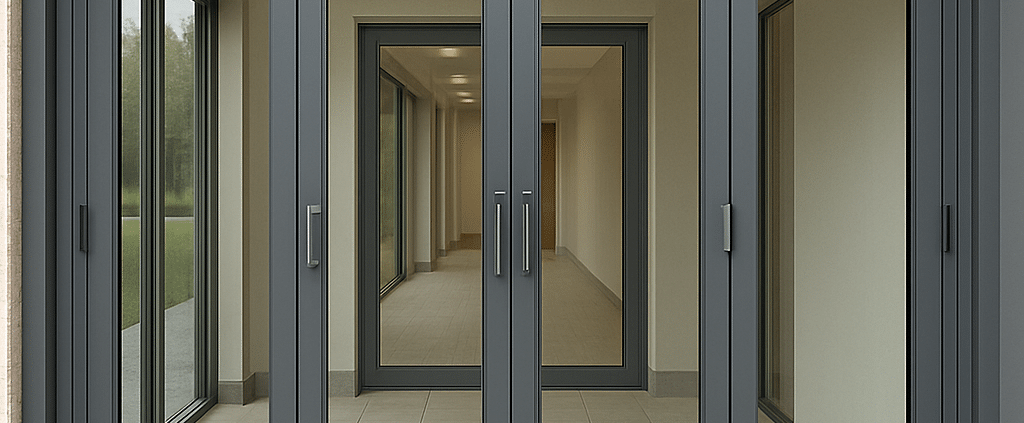
Automatic doors play a crucial role in modern buildings across the UK. From busy retail units and hospitals to offices and industrial premises, they improve accessibility, control foot traffic, and enhance energy efficiency. Choosing the right type of automatic door is important not only for functionality but also for safety compliance and long-term reliability.
Below, we explore the main types of automatic doors and where they are best suited.
Sliding Automatic Doors

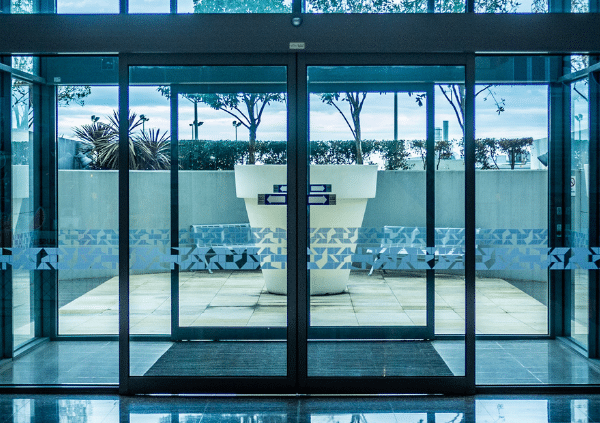
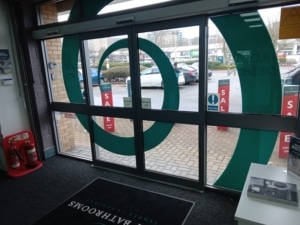
Sliding automatic doors are one of the most widely used entrance systems in commercial environments. They operate using motion sensors that trigger door panels to glide horizontally along a track. Because they don’t swing in or out, they are ideal for areas where space is limited or where there is constant foot traffic.
These doors are commonly installed in supermarkets, healthcare facilities, airports and shopping centres. Their smooth operation allows continuous flow, reducing congestion during peak hours.
If you are unsure which sliding system suits your building, our team provides expert advice and servicing through our Automatic Door Repairs in Manchester page, where we also cover the various styles available and maintenance considerations.
Automatic Swing Doors
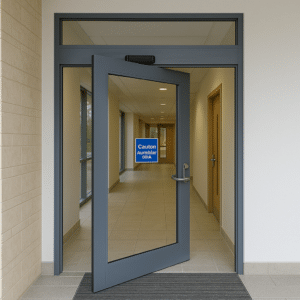
Automatic swing doors look similar to traditional hinged doors but are powered by a motorised operator. They can open inward, outward, or in both directions depending on requirements. These systems are particularly useful where sliding doors cannot be installed due to structural or layout restrictions.
They are frequently used in care homes, schools, office corridors and accessible entrances. Swing doors are also a strong choice when compliance with accessibility regulations is a priority, as they can be fitted with push pads or radar activation.
Revolving Automatic Doors
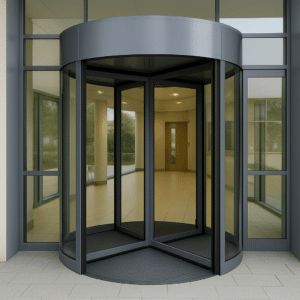
Revolving doors are often chosen for high-end commercial properties. With multiple panels rotating around a central axis, they provide continuous access while maintaining internal temperature control. This makes them an energy-efficient solution for large office buildings, hotels and corporate headquarters.
Because they minimise the exchange of external air, they can help reduce heating and cooling costs over time. However, they are typically suited to larger entrances with sufficient space for installation.
Telescopic Automatic Doors
Telescopic doors are a variation of sliding systems. Instead of two panels sliding apart, multiple panels stack neatly to one side. This design allows for a wider clear opening while using less wall space.
They are particularly beneficial for healthcare environments or narrow entranceways where maximum access width is required. If you would like a more detailed comparison between sliding, swing and telescopic systems, our related guide on Types of Automatic Doors – The Pros & Cons explains the advantages and limitations of each in more depth.
Folding Automatic Doors

Folding (or bi-fold) automatic doors operate by folding panels inward as they open. They are commonly used where space is extremely restricted but a wide access point is still needed.
These doors are often installed in smaller retail units, industrial buildings, and certain public sector properties. While not as common as sliding doors, they provide an effective alternative when structural limitations prevent other options.
Safety, Compliance & Professional Standards
When installing automatic doors in the UK, compliance with safety regulations is essential. Powered pedestrian doors must meet standards such as BS EN 16005, which covers safe use and installation requirements.
To ensure work is completed to recognised industry standards, it is always advisable to choose contractors associated with professional bodies such as the Automatic Door Suppliers Association (ADSA) (https://adsa.org.uk), which promotes training, safety compliance and technical excellence within the automatic door sector.
Another respected organisation is the Door & Hardware Federation (DHF) (https://www.dhfonline.org.uk), which represents manufacturers and installers across the UK and provides guidance on best practices and regulatory compliance.
Working with accredited professionals reduces risk and ensures your doors remain safe, reliable and legally compliant.
Why Ongoing Maintenance Matters
Automatic doors are mechanical systems that experience frequent daily use. Without routine servicing, components such as sensors, rollers and motors can wear prematurely.
Regular inspections help:
- Maintain smooth operation
- Prevent unexpected breakdowns
- Ensure safety sensor accuracy
- Extend system lifespan
- Protect your business from costly downtime
If you’re experiencing issues or simply need preventative servicing, professional maintenance support ensures your system continues to operate safely and efficiently.
Choosing the Right Automatic Door
Selecting the correct automatic door depends on several factors:
- Volume of daily foot traffic
- Available installation space
- Energy efficiency requirements
- Accessibility needs
- Aesthetic preferences
- Budget considerations
Each building has unique demands, which is why tailored advice is important before installation.
Automatic doors offer far more than convenience, they improve accessibility, enhance safety, and contribute to the overall efficiency of a building. Whether you require sliding, swing, telescopic or revolving systems, choosing the right type and ensuring proper maintenance is key to long-term performance.
If you are looking for automatic door repairs, installation or servicing in Manchester, Liverpool and throughout the North West choose UK Doors & Shutters, the North West’s #1 specialists